 Mythology in Contemporary Art
Mythology in contemporary art is often misunderstood as nostalgic storytelling or symbolic decoration. However, mythology in contemporary art functions as a structural system of meaning. It is not about retelling ancient stories. It is about activating archetypes that still shape human consciousness.Mythology does not belong to the past. It belongs to the architecture of identity.In serious artistic practice, mythology in contemporary art becomes a tool for transformation. It allows the artist to explore shadow, ambition, silence, power, and transcendence without reducing them to autobiography.
Myth is not fantasy.
It is psychological structure.
The Function of Myth Beyond Narrative
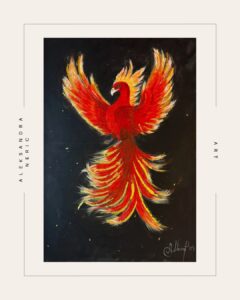
When mythology appears in contemporary art, it is rarely about literal gods or historical belief systems. Instead, mythology in contemporary art operates as a framework for understanding human evolution.Archetypes such as the phoenix, the eagle, the serpent, or the warrior persist because they represent structural forces:
– destruction and rebirth
– elevation and vision
– renewal through shedding
– confrontation and courage
These figures survive across centuries because they are not cultural accidents. They are cognitive patterns.Mythology in contemporary art uses these patterns not as decoration, but as architecture.
The artist does not illustrate myth.
The artist activates it.
Mythology as Psychological Architecture
Carl Jung introduced the idea of archetypes as universal symbols embedded in the collective unconscious. However, mythology in contemporary art goes beyond theoretical psychology.It becomes lived structure.When an artist repeatedly returns to certain mythic figures, this repetition is not stylistic coincidence. It reveals an internal pattern. Myth becomes a mirror of internal development.
The phoenix does not simply symbolize rebirth. It represents the necessity of combustion before elevation.
The serpent does not symbolize evil. It represents transformation through shedding old identity.
The eagle does not symbolize pride. It represents altitude earned through isolation and vision.
Mythology in contemporary art allows these forces to be explored visually without being simplified.
From Illustration to System
There is a difference between illustrating myth and working within mythology in contemporary art as a system.Illustration recreates scenes.Systemic mythology restructures perception.When mythic elements are placed inside contemporary composition, scale, and abstraction, they stop being stories and start becoming mechanisms.In this sense, mythology in contemporary art is not about romanticizing the past. It is about confronting the present through archetypal structure.It asks:
What must die?
What must rise?
What must be integrated?
These are not narrative questions. They are existential ones.
 Mythology and the Shadow
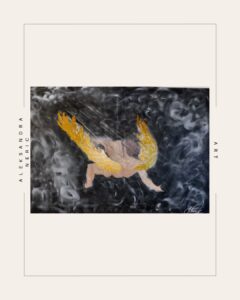
One of the strongest functions of mythology in contemporary art is shadow integration.Ancient myths rarely avoided darkness. They confronted betrayal, exile, descent, sacrifice, and loss. Modern culture often prefers comfort and surface positivity. Myth does not.In contemporary art practice, mythology provides a language for complexity. It allows the artist to address ambition, silence, fragmentation, and transcendence without moralizing them.
Shadow is not evil.
It is unintegrated energy.
Mythology in contemporary art becomes a disciplined method of integrating that energy into form.
When darkness is structured, it becomes illumination.
Myth as Personal Mythology
Every serious artist eventually develops a personal mythology. This does not mean inventing fictional characters. It means recognizing recurring archetypes within one’s work. If certain symbols return across canvases, texts, or compositions, they are not trends. They are signals. Mythology in contemporary art becomes autobiographical without being literal. It encodes psychological growth into visual language. The artist does not need to explain everything. Myth functions precisely because it allows layered interpretation.It communicates through structure, not instruction.
Mythology in Contemporary Art and Transformation
Transformation is central to mythology in contemporary art.In ancient myths, transformation was never comfortable. It required descent, trial, sacrifice, or confrontation. The same is true in serious artistic practice.The work evolves only when the artist evolves.Mythic imagery holds the tension between destruction and elevation. It captures the paradox that growth requires instability.In contemporary art, mythology becomes a system for exploring that paradox.Not as fantasy.But as process.
Why Mythology Still Matters Today
Some argue that mythology belongs to religious history, not contemporary art. However, this perspective misunderstands the function of myth.Mythology in contemporary art does not require belief in gods. It requires recognition of archetypal forces.Even in technological societies, humans remain driven by ambition, fear, loyalty, isolation, desire, and transcendence. Myth names these forces.Contemporary art that engages mythology does not regress. It deepens.It acknowledges that progress without archetypal awareness creates fragmentation.Mythology in contemporary art reconnects structure with instinct.
Conclusion: Myth as Structural Responsibility
Mythology in contemporary art is not decorative symbolism. It is a method of constructing meaning through archetypal architecture.To work with myth is to accept responsibility for depth.
It means refusing superficial light.
It means structuring shadow.
It means recognizing transformation as necessity, not spectacle.
Myth persists because human evolution is unfinished.And mythology in contemporary art remains relevant because becoming remains ongoing.
Written by: Aleksandra Ana Neric